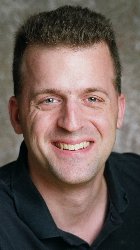
Christoph T. Weidemann
|
Honorary Associate Professor at
|
![[e-mail]](mail.gif)
Research Interests |
Top ![[up]](up.gif)
| Vita ![[down]](down.gif) |
Publications |
Links |
Cognitive processes, such as those involved in perception, memory, and decision making, are highly context dependent. Previous experiences, expectations, and goals all shape how sensory input is transformed into percepts, how memories are stored and retrieved and how available information is evaluated to guide behavior. This feature of human information processing is fascinatingly pervasive and can be easily experienced, especially in cases when it leads to errors. For example, it is often difficult to identify a familiar face outside of its usual context ("the butcher on the bus" phenomenon) and the the erroneous repetition of written words often goes unnoticed ("repetition blindness"; an example is embedded in this very sentence). Despite leading to errors in some cases, the integration of context with current processing is integral to cognition because it constitutes the foundation for learning and adaptive behavior. My research investigates how context shapes human information processing. To this end I measure accuracy and speed of overt behavior as well as activity in the human brain as assessed with tools such as electroencephalography (EEG), magnetoencephalography (MEG) and direct recordings from electrodes that are implanted in the brains of neurosurgery patients. I use statistical and computational models to account for overt behavior and brain activity in an effort to precisely characterize cognitive processes.
Brief vita |
Top
| Research |
Publications |
Links |
- July, 2022 – present:
- Data Scientist
Meta, New York, NY, USA - August, 2021 – present:
- Honorary Associate Professor at the Department of Psychology
![[link]](external.png) ,
,
Swansea University, Wales, UK - March, 2023 – May, 2023:
- Visiting Associate Professor at the Department of Global Studies,
Duke University - December, 2019 – July, 2022:
- Associate Reseach Scientist at the Department of Biomedical Engineering ,
Columbia University, USA - March, 2010 – July, 2021:
- Lecturer – Associate Professor at the Department of Psychology ,
Swansea University, Wales, UK - July, 2019 – December, 2019:
- Visiting Scholar at the Computational Memory Lab ,
Department of Psychology, University of Pennsylvania, USA - August, 2015 – July, 2018:
- Visiting Scholar at the Computational Memory Lab ,
Department of Psychology, University of Pennsylvania, USA - October, 2006 – March, 2010:
- Post-doctoral research fellow at the Computational Memory Lab ,
Department of Psychology, University of Pennsylvania, USA; supervisor: Prof. Michael J. Kahana - August, 2006:
- PhD in psychology and cognitive science (minor in neuroscience).
Indiana University, Bloomington, USA; adviser: Prof. Richard M. Shiffrin - Spring & Summer, 2004:
- Pre-doctoral research fellow at the Center for Adaptive Behavior and Cognition ,
Max Planck Institute for Human Development, Berlin, Germany - September, 2002:
- Diplom (German degree similar to MS/MA/MSc) in psychology.
University of Bonn, Germany
Publications & Manuscripts |
Top
| Research |
Vita |
Links |
(my profile on Google Scholar )
I had to transfer the copyright for some of the
articles listed below to the publishers of the journals in which they
appeared. However, I am allowed to distribute copies to individuals
for personal and/or research use. Your click on any of the links below
constitutes your request to me for a personal copy of the linked
article. A detailed copyright notice appears in the articles. Nature's
web debates published an interesting relevant article by Richard
M. Stallman
titled "Science must `push
copyright aside´" .
2023
-
Kahana, M. J., Lohnas, L. J., Healy, M. K., Aka, A., Broitman, A., Crutchley, P., Crutchley, E., Alm, K. H., Katerman, B. S., Miller, N. E., Kuhn, J. R., Li, Y., Long, N. M., Miller, J., Paron, M. D., Pazdera, J. K., Pedisich, I., & Weidemann, C. T. (2023). The Penn Electrophysiology of Encoding and Retrieval Study. PsyArXiv.
![[PDF]](pdf.gif)
-
Rubinstein, D. Y., Weidemann, C. T., Sperling, M. R., & Kahana, M. J. (2023). Direct brain recordings suggest a causal
subsequent-memory effect. Cerebral Cortex, 33, 6891–6901.
2021
-
Kunz, L., Brandt, A., Reinacher, P. C., Staresina, B. P., Reifenstein, E. T., Weidemann, C. T., Herweg, N. A., Tsitsiklis, M., Kempter, R., Kahana, M. J., Schulze-Bonhage, A., & Jacobs, J. (2021). A neural code for egocentric spatial maps in the human medial temporal lobe. Neuron, 109, 1–16.
- Weidemann, C. T. & Kahana,
M. J. (2021). Neural measures of subsequent memory reflect
endogenous variability in cognitive function.
Journal of Experimental Psychology: Learning, Memory, and Cognition, 47, 641–651.
- Supplementary table.
- bioRxiv preprint.
- Data & analysis scripts. (e-mail for alternative arrangements / assistance)
- Supplementary table.
2020
-
Rahnev, D., Desender, K., Lee, A. L. F., Adler, W. T., Aguilar-Lleyda,
D., Akdoğan, B., Arbuzova, P., Atlas, L. Y., Balcı, F.,
Bang, J. W., Bègue, I., Birney, D. P., Brady, T. F.,
Calder-Travis, J., Chetverikov, A., Clark, T. K., Davranche, K.,
Denison, R. N., Dildine, T. C., Double, K. S., Duyan, Y. A., Faivre,
N., Fallow, K., Filevich, E., Gajdos, T., Gallagher, R. M., de
Gardelle, V., Gherman, S., Haddara, N., Hainguerlot, M., Hsu, T.-Y.,
Hu, X., Iturrate, I., Jaquiery, M., Kantner, J., Koculak, M., Konishi,
M., Koß, C., Kvam, P. D., Kwok, S. C., Lebreton, M., Lempert,
K. M., Lo, C. M., Luo, L., Maniscalco, B., Martin, A., Massoni, S.,
Matthews, J., Mazancieux, A., Merfeld, D. M., O'Hora, D., Palser,
E. R., Paulewicz, B., Pereira, M., Peters, C., Philiastides, M. G.,
Pfuhl, G., Prieto, F., Rausch, M., Recht, S., Reyes, G., Rouault, M.,
Sackur, J., Sadeghi, S., Samaha, J., Seow, T. X. F., Shekhar, M.,
Sherman, M. T., Siedlecka, M., Skóra, Z., Song, C., Soto, D.,
Sun, S., van Boxtel, J. J. A., Wang, S., Weidemann, C. T., Weindel,
G., Wierzchoń, M., Xu, X., Ye, Q., Yeon, J., Zou, F., &
Zylberberg, A. (2020). The confidence database. Nature Human Behaviour, 4, 317–325.
- Boyce, W. P., Whiteford, S., Curran, W., Freegard,
G., & Weidemann, C. T. (2020). Splitting Time: Sound-Induced Illusory
Visual Temporal Fission and Fusion.
Journal of Experimental Psychology:
Human Perception and Performance, 46, 172–201.
2019
-
Starns, J. J., Cataldo, A. M., Rotello C. M., Annis, J.,
Aschenbrenner, A., Bröder, A., Cox, G., Criss, A., Curl, R. A.,
Dobbins, I. G., Dunn, J., Enam, T., Evans, N. J., Farrell, S.,
Fraundorf, S. H., Gronlund, S., Heathcote, A., Heck, D. W., Hicks,
J. L., Huff, M. J., Kellen, D., Key, K. N., Kılıç, A., Klauer,
K. C., Kraemer, K. R., Leite, F. P., Lloyd, M. E., Malejka, S.,
Mason, A., McAdoo, R. M., McDonough, I. M., Michael, R. B., Mickes,
L., Mizrak, E., Morgan, D. P., Mueller, S. T., Osth, A., Reynolds,
A., Seale-Carlisle, F. T. M., Singmann, H., Sloane, J. F., Smith,
A. M., Tillman, G., van Ravenzwaaij, D., Weidemann, C. T., Wells,
G. L., White, C. N., & Wilson, J. (2019). Assessing theoretical
conclusions with blinded inference to investigate a potential
inference crisis. Advances in Methods and Practices in Psychological Science, 2, 335–349.
-
Weidemann, C. T.*, Kragel,
J. E.*, Lega, B. C., Worrell, G. A.,
Sperling, M. R., Sharan, A. D., Jobst, B. C., Khadjevand,
F., Davis, K. A., Wanda, P. A., Kadel, A., Rizzuto, D. S.,
& Kahana, M. J. (2019). Neural activity reveals
interactions between episodic and semantic memory systems
during retrieval. Journal of
Experimental Psychology: General, 148, 1–12. *Contributed
equally.
- Data & analysis scripts. (e-mail for alternative arrangements / assistance)
- Data & analysis scripts.
-
Weidemann, C. T. & Kahana, M. J. (2019). Dynamics of brain
activity reveal a unitary recognition signal. Journal of
Experimental Psychology: Learning, Memory, and Cognition,
45, 440–451.
- bioRxiv preprint.
- Data & analysis scripts. (e-mail for alternative arrangements / assistance)
- bioRxiv preprint.
2017
![[DOC]](page_text.gif)
2016
-
Weidacker, K., Weidemann, C. T., Boy, F., & Johnston, S. J. (2016).
Cathodal tDCS improves task performance in participants high in Coldheartedness.
Clinical Neurophysiology, 127, 3102–3109.
-
Weidemann, C. T. & Kahana, M. J. (2016). Assessing recognition memory using confidence ratings and
response times. Royal Society Open Science, 3, 150670.
![[ZIP]](tables.gif)
![[ZIP]](page_dynamic.gif)
2015
2014
-
Burns, E. J., Tree, J. J., & Weidemann,
C. T. (2014). Recognition Memory in Developmental
Prosopagnosia: Electrophysiological Evidence for Abnormal
Routes to Face Recognition. Frontiers in Human
Neuroscience, 8, 622.
-
Ramayya, A. G., Zaghloul, K. A., Weidemann, C. T., Baltuch,
G. H. & Kahana, M. J. (2014). Electrophysiological
evidence for functionally distinct neuronal populations in the
human substantia nigra. Frontiers in Human Neuroscience,
8, 655.
2013
-
Jacobs, J., Weidemann, C. T., Miller, J. F., Solway, A.,
Burke, J., Wei, X.-X., Suthana, N., Sperling, M., Sharan,
A. D., Fried, I., & Kahana, M. J. (2013). Direct
recordings of grid-like neuronal activity in human spatial
navigation. Nature Neuroscience, 16, 1188–1190.
- Leighton, I. D., Hiemstra, J. F., &
Weidemann, C. T. (2013). Recognition of micro-scale
deformation structures in glacial sediments — pattern
perception, observer bias and the influence of experience.
Boreas, 42, 463–469.
![[image]](./papers/JacobsEtAl2013_largecover.gif)
2012
- Blagrove M., Fouquet N. C., Baird A. L.,
Pace-Schott E. F., Davies A. C., Neuschaffer J. L.,
Henley-Einion J. A., Weidemann C. T., Thome J., McNamara P.,
& Turnbull O. H. (2012). Association of salivary-assessed
oxytocin and cortisol levels with time of night and sleep
stage. Journal of Neural
Transmission, 119, 1223–1232.
- Miller, J. F., Weidemann, C. T., &
Kahana, M. J. (2012). Recall termination in free recall.
Memory & Cognition, 40, 540–550.
-
Zaghloul, K. A., Weidemann, C. T., Lega,
B. C., Jaggi, J. L., Baltuch, G. H., & Kahana,
M. J. (2012). Neuronal activity in the human subthalamic
nucleus encodes decision conflict during action selection.
Journal of Neuroscience, 32, 2453–2460.
- Mueller, S. T. & Weidemann,
C. T. (2012). Alphabetic Letter Identification: Effects of
perceivability, similarity, and bias.
Acta Psychologica, 139, 19–37.
2011
2009
- Zaghloul, K. A., Blanco, J. A., Weidemann,
C. T., McGill, K., Jaggi, J. L., Baltuch, G. H., &
Kahana, M. J. (2009). Human substantia nigra neurons encode
unexpected financial rewards. Science, 323,
1496–1499.
- Weidemann, C. T., Mollison M. V., &
Kahana, M. J. (2009). Electrophysiological correlates of
high-level perception during spatial
navigation. Psychonomic Bulletin and Review, 16,
313–319.
2008
- Weidemann, C. T. & Mueller,
S. T. (2008). Decision noise may mask criterion shifts: Reply
to Balakrishnan and MacDonald (2008).
Psychonomic Bulletin and Review, 15, 1031–1034.
- Mueller, S. T. & Weidemann,
C. T. (2008). Decision noise: An explanation for observed
violations of Signal Detection Theory.
Psychonomic Bulletin and Review, 15, 465–494.
- Weidemann, C. T., Huber, D. E., &
Shiffrin, R. M. (2008). Prime diagnosticity in short-term
repetition priming: Is primed evidence discounted, even when
it reliably indicates the correct answer?
Journal of Experimental Psychology: Learning, Memory, and Cognition, 34, 257–281.
2005
Quality links |
Top
| Research |
Vita |
Publications |
Selected colleagues and collaborators:
- David E. Huber: Professor at the
University of Massachusetts, Amherst,
USA
- Michael J. Kahana:
Professor at the Psychology Department, University of
Pennsylvania, USA
- Shane T. Mueller: Associate professor at
Michigan Technological University, USA
- Sean M. Polyn: Consummate scientician
and
Associate professor at the Department of Psychology,
Vanderbilt University, USA
- Amanda Q. X. Nio: Research assistant at the Biomedical
Engineering Department, Kings College, London, UK
- Adam N. Sanborn:
Professor at the Department of Psychology, The
University of Warwick, UK
- Per B. Sederberg: Associate professor at the
Department of Psychology, University of Virginia, USA
- Richard M. Shiffrin:
Professor at the Department of Psychological and Brain
Sciences, Indiana University, USA
Great software for science:
Below I am posting links to a few selected programs (not written by me) that I find particularly useful for scientific work. All programs linked below are free in the sense that anyone may download, install, use, modify, and re-distribute them (detailed information can be found on the respective websites linked below). This freedom is particularly valuable for scientific work, because it allows the free sharing of one's work with collaborators, colleagues, students, or anyone else without requiring permission of the copyright holder of the associated program. All the programs linked below run on a variety of platforms such as Linux, Windows, and MacOS.
- The Python programming language
- A nice object
oriented programming language, well suited for scientific
computing. Various libraries cover a wide range of possibly
applications.
Of particular interest are
- Scientific Python (SciPy),
- PsychoPy Psychology Software in Python,
-
the plotting libraries Matplotlib and
-
Seaborn , as well as
- various libraries for artificial intelligence and machine learning
(see the Python for artificial intelligence
WIKI for an overview).
and the websites of the respective libraries. - Scientific Python (SciPy)
- The R project for statistical computing
- A powerful software environment for statistical computing and graphics. Relevant related software includes
- LaTeX
- A high-quality document preparation and typesetting system optimized for technical and scientific documents. Also useful for creating presentations and posters.
- Unison
- A great file synchronizer. Not directly science related, but useful for anybody who regularly uses more than one computer and wants to keep them synchronized.